

When Memories Fade: A Daughter’s Story and Swastha’s Support in Dementia Home Care
May 20, 2025
Holding On Through the Hard Days: A Daughter’s Journey and Swastha’s Role in Cancer Home Care
May 27, 2025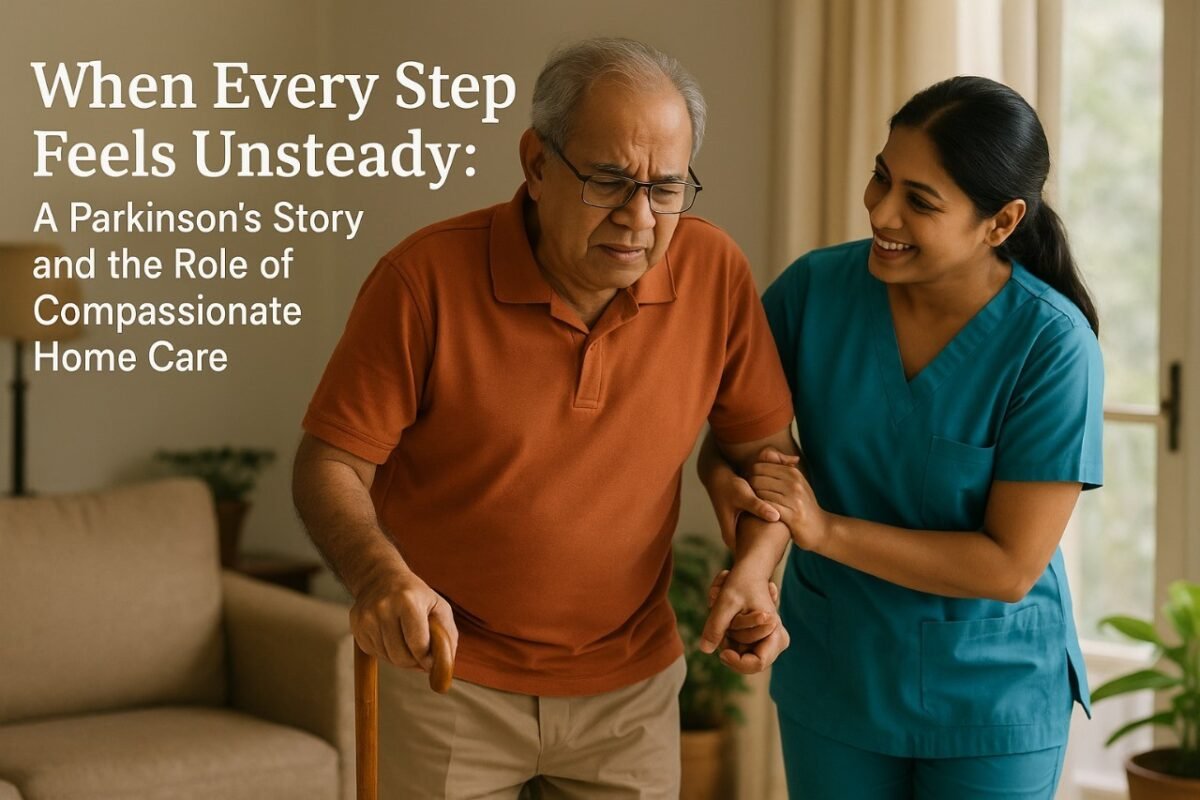
Swastha Came Across a Case
Swastha was approached by Priya Iyer, a daughter living in Toronto, who was growing increasingly worried about her 76-year-old father, Mr. Rajan Iyer, who lives alone in Bangalore. He had recently been diagnosed with Parkinson’s disease and had started showing signs of stiffness, slow movement, and difficulty with basic activities. One evening, he fell while trying to walk to the bathroom — an incident that left Priya feeling helpless from thousands of miles away.That’s when she reached out to Swastha. Within 48 hours, a trained Parkinson’s caregiver was present at Mr. Iyer’s home. The caregiver not only helped prevent further falls and ensured that medications were taken on time, but also provided the companionship and emotional support that Mr. Iyer needed. Today, he feels safer in his home, and Priya feels reassured knowing that her father is in good hands.
Understanding Parkinson’s Disease –
Parkinson’s disease is a progressive neurological disorder that primarily affects movement. It occurs when nerve cells in the brain that produce dopamine begin to deteriorate. Dopamine is a chemical messenger that plays a vital role in coordinating smooth and balanced muscle activity. As dopamine levels drop, individuals begin to experience difficulty with motor function, balance, and eventually, everyday tasks. While Parkinson’s is more common in people over the age of 60, early-onset cases can also occur. Although there is currently no cure, early intervention and consistent care can make a significant difference in managing the disease.
Common Signs and Symptoms
The symptoms of Parkinson’s develop gradually and vary from person to person. Some of the most common signs include:
- Tremors, usually in the hands or fingers
- Muscle stiffness or rigidity
- Bradykinesia (slowness of movement)
- Shuffling gait or difficulty walking
- Postural instability, leading to frequent falls
- Soft or slurred speech
- Reduced facial expression
- Mood changes such as depression or apathy
In Mr. Iyer’s case, increasing rigidity and freezing episodes were early indicators. His fall was not just a physical danger—it was also a wake-up call for timely intervention.
Why Early Support Matters –
Parkinson’s is a condition that requires more than medical prescriptions. As symptoms progress, individuals often need help with:
- Medication management
- Personal care and hygiene
- Physical therapy or light exercise
- Emotional and mental support
- Ensuring home safety to prevent falls
Without proper support, there is a real risk of injury, isolation, and a rapid decline in
overall well-being. That’s where trained care companions can make a meaningful difference.
How Swastha Supports Families and Individuals with Parkinson’s?
At Swastha, we understand that Parkinson’s is not just a medical condition—it’s a life change, both for the individual and their family. Our trained caregivers offer personalized care plans designed to support patients at every stage of their journey.
- Fall Prevention -Caregivers assist with mobility, provide physical support during movement, and ensure the home environment is free of fall risks.
- Medication Adherence -Timing is critical for Parkinson’s medications. Our caregivers ensure all medications are taken as prescribed, and they monitor for side effects or complications.
- Emotional and Cognitive Support – Parkinson’s can take a toll on mental health. Swastha companions provide calm, structured routines and engage patients in conversations and activities to keep the mind active.
- Assistance with Daily Living – We offer respectful support with bathing, dressing, grooming, and meals—helping individuals maintain dignity and independence.
- Communication and Updates for Families -Whether family members are in the same city or abroad, we keep them informed and connected with regular updates and immediate alerts if concerns arise.
- A Life Transformed Through Care -What began as a fall for Mr. Iyer became a turning point. With the right support, he regained confidence in his own home. He feels safer, more engaged, and less alone. For his daughter Priya, Swastha has become a bridge—a trusted partner that allows her to care for her father across continents
Final Thoughts
Parkinson’s disease brings challenges, but with the right care and attention, individuals can continue to lead fulfilling and dignified lives. Whether your loved one is in the early stages of Parkinson’s or navigating its more advanced phases, consistent, thoughtful care is essential.
At Swastha, we are committed to walking this path with you—ensuring your loved ones receive the compassion, support, and safety they deserve.
If someone in your family is showing signs of Parkinson’s or needs help managing it, reach out to us. Let Swastha be your partner in care—wherever you are.